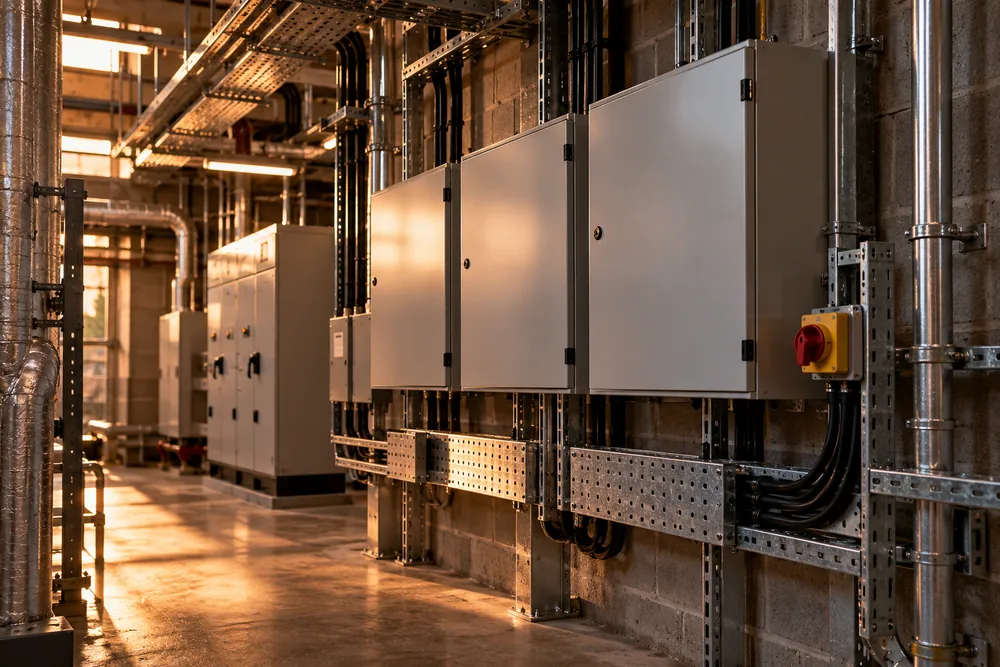
Testing The Fixed Electrical Installation
Fixed wire testing is a common name for periodic inspection and testing of the permanent electrical installation. It deals with the system distributing electricity through your building, rather than simply checking appliances plugged into sockets. The resulting findings are normally recorded in an Electrical Installation Condition Report.
The inspection boundary can include distribution boards, lighting circuits, socket circuits and other fixed supplies. Earthing, bonding and protective devices are considered as part of the installation assessment. The agreed scope should identify which buildings, floors, boards and supplies are covered, especially on multi-occupier sites.
A useful testing programme starts with the circuits and operating constraints, not a promise that every test can happen while everyone continues working. Some work needs controlled interruption. We help establish what needs access, what can be isolated and which site representatives must be present.
Why Testing Needs Preparation
Office servers, refrigeration, access control, alarms and production equipment can be affected by an interruption. Ask the people responsible for these systems about shutdown and restart requirements before agreeing a visit. The electrical inspector cannot safely assume that a circuit label fully describes everything connected to it.
Poor records can add time because circuit identities and distribution boundaries may need checking. If there are previous reports, drawings or schedules, share them early. A building that has changed use or layout may also need its records brought into line with the installation actually present.
Standards And Safe Working
BS 7671 is the technical reference for inspection and testing of fixed electrical installations. The legal safety duties sit within the Electricity at Work Regulations 1989. Testing should be undertaken by people with competence appropriate to the installation and to interpreting the results.
Safe isolation and prevention of unintended reconnection are central to the work. HSE guidance explains that exposed conductors should be proved dead before work begins on them. Read the HSE electrical safety questions for background on competence and isolation.
How The Testing Visit Works
First, we establish the premises type and inspection boundary. Circuit quantities, board locations, previous observations and special operating conditions are reviewed. A written scope should set out any sampling approach and limitations, with the reasons understood before the work is priced.
Next, access and isolation arrangements are agreed with the responsible site contact. Inspection combines visual assessment with the relevant instrument tests for the installation. Test selection and disconnection of sensitive equipment require judgement, so the method should be chosen by the competent person carrying out the work.
After testing, the findings are reviewed and recorded in the condition report with the associated schedules. Any areas not inspected should be visible in the limitations. The handover should explain significant observations, immediate concerns and the recommended next steps without disguising unresolved work as a completed inspection.
What Changes The Testing Cost
The number of circuits and distribution boards is a key input, but accessibility and complexity matter as well. Locked rooms, inaccessible ceiling spaces, unclear circuit labels and multiple occupiers can affect the time needed. Night work and a phased programme may also change the quotation.
Ask whether the price includes the report, circuit schedules and a discussion of the findings. Confirm what happens if access is unavailable or further investigation is needed. A low headline price is difficult to compare unless the scope, limitations and deliverables are the same.
After The Inspection
Testing gives you a record of condition at the time and within the agreed boundary. It does not remove the need for ongoing maintenance or for staff to report damage. Store the report where future facilities staff can find it, together with certificates for repairs and subsequent alterations.
If your main objective is to understand the written findings, our commercial EICR guide explains report terminology. For movable equipment, see PAT testing. These are different inspection needs, and the programme should say which systems are included rather than grouping everything under electrical testing.
Fixed Wire Testing FAQs
Will Fixed Wire Testing Interrupt The Power?
Fixed wire testing usually involves some power interruptions because parts of the installation need to be safely isolated. The affected circuits and practical timing should be agreed in advance. Identify sensitive systems and restart procedures early, and do not assume that an occupied building can be tested without any shutdowns.
Do I Need To Count Every Circuit Before Enquiring?
A fixed wire testing enquiry can start without an exact circuit count. Send existing schedules, previous reports and photographs of closed board covers if available. A survey may be needed to establish the scope, particularly where records are missing or the building has multiple tenants and shared electrical supplies.